
What does sewer line hydro jetting address?
Sewer line hydro jetting is water-based cleaning of a suitable wastewater line serving a building. Its purpose is to remove deposits or obstructions that interfere with flow, rather than simply opening a narrow path through a clog. It may be relevant when several fixtures drain poorly together or a main line repeatedly blocks after mechanical clearing. The first task is to identify the affected drainage path and whether the pipe is sound enough to clean.
The words “main sewer line” can mean different things during a phone conversation. A property owner may be describing the private line leaving the building, while a utility may use “main” for the public collection pipe in the street. Explain where the symptoms occur and ask the provider what portion they propose to assess. Private drain cleaning should not be presented as authorization to work on a public sewer or utility-owned equipment.
For hydro jetting in Decatur, a useful recommendation starts with the condition of your individual line. Property age, neighborhood reputation, and a previous unclogging visit do not prove that water jetting is appropriate now. Share known repairs and inspection records. If the line has a structural problem, cleaning may be only a preliminary step toward understanding what repair is necessary.
How does a provider clean a main sewer line?
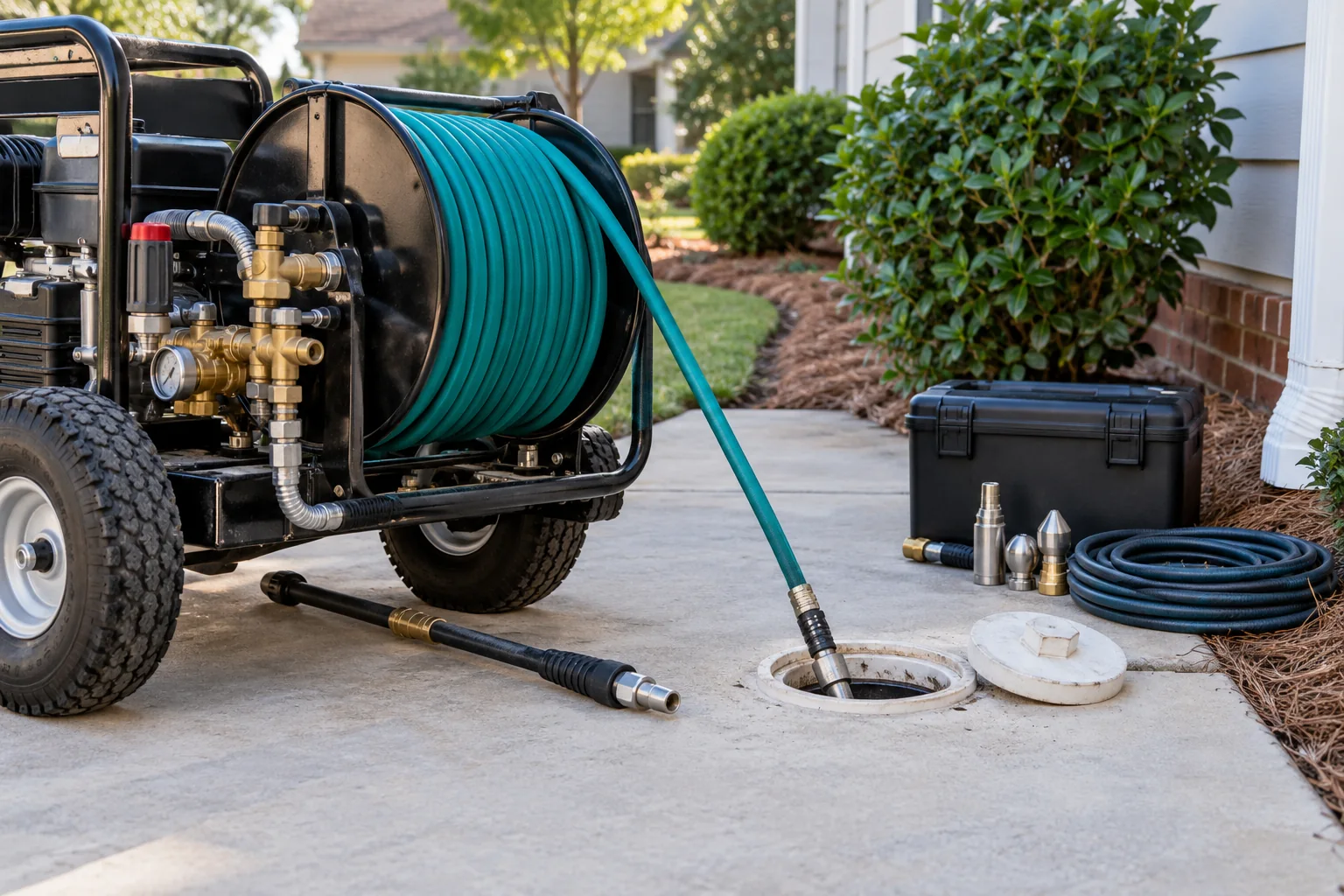
The provider looks for suitable access, such as an appropriate cleanout, and considers the direction of flow and the position of the obstruction. A hose is fed into the line under controlled conditions. Water from a selected nozzle loosens deposits and helps transport waste toward the intended discharge path. Equipment, flow, and pressure should be matched to the drain, its condition, and the material being removed.
Not every main-line problem starts with a jetter. A completely obstructed section may require initial mechanical clearing before a camera can travel far enough to show the cause. A camera may be recommended before cleaning when the line's condition is uncertain. If standing water or heavy deposits obscure the view, the provider should explain what remains unknown and how the sequence of clearing and inspection addresses that limitation.
Good access planning includes the space needed for equipment, where the water supply comes from, and how the work area will be protected. Tell the provider about locked gates, enclosed courtyards, pets, and previous cleanout locations. A cleanout buried under landscaping is an access question, not something the caller should excavate without advice. Do not remove a cap from a potentially backed-up line to investigate it yourself.
During cleaning, the provider may make multiple passes or change nozzles as the condition becomes clearer. That is different from a promise that every line will be fully restored within a fixed number of minutes. Ask what outcome is expected, how the result will be checked, and which findings would stop cleaning. If the pipe is unsafe to continue, the provider should discuss the alternative before expanding the work.
Which eight signs deserve main-line assessment?
- More than one fixture drains slowly at the same time. This pattern may involve a common downstream section, although the provider needs to confirm the layout.
- A lower shower or tub receives water when a toilet is flushed. Explain the relationship between the fixtures and avoid repeated flushing while arranging help.
- Drainage returns briefly after cable clearing, then deteriorates again. Record the dates and any findings from earlier visits rather than assuming the tool was the only issue.
- Gurgling follows water discharge from another fixture. Describe when it happens because drainage and venting problems can produce overlapping symptoms.
- Wastewater appears around an exterior cleanout. Stay away from contaminated water and tell the provider where it is occurring without opening the line.
- Laundry discharge causes a backup elsewhere in the building. Larger releases can reveal a restriction that is less obvious during light sink use.
- Previous inspection footage shows substantial deposits or roots. Ask whether the footage remains relevant and whether a new assessment is necessary.
- A persistent drainage problem affects normal use of the property. The seriousness depends on the actual backup and access to working facilities, not just the sound of the drain.
Why might a sewer line keep blocking?
Deposits can build gradually along pipe walls, leaving less open space for wastewater. Grease from kitchen drainage may combine with other material downstream. Waste that should not have been flushed can catch on an existing restriction. Cleaning may be useful when the main problem is removable accumulation, but the provider still needs to explain how the material will be moved out of the affected line.
Tree roots can enter through a joint or opening and collect debris. Clearing the visible obstruction may improve flow while leaving the entry point intact. Ask whether the line needs specialized root clearing, inspection after access is restored, or evaluation for repair. Neither ordinary jetting nor a mechanical cutter should be described as a guaranteed permanent repair to an opening in the sewer.
A low section of pipe can retain water and collect material. A displaced joint, deterioration, or collapse can also create an obstruction that returns after cleaning. These conditions are different from ordinary wall buildup. If a provider recommends repair, request the evidence and the location of the defect. A short explanation tied to inspection findings is more useful than a broad claim that the whole line must be replaced because it is old.
Public collection-system issues are another possibility when several neighboring properties are affected or a problem appears associated with street-side infrastructure. That does not prove the cause is public, but it is information to report. Decatur Utilities provides information about its sewer rehabilitation work. Clarify whether the proposed work concerns your private line or the public collection system.
What can you check safely before the appointment?
Write down which fixtures are slow and which ones still work normally. Note the first occurrence, recent changes, and whether symptoms returned after a prior visit. You can identify a visible cleanout from a safe distance, but there is no need to open it. A backed-up line can release wastewater unexpectedly, so leave access and pressure handling to the provider.
Gather existing invoices, footage, and information about any sewer replacement or spot repair. If you rent, contact the person responsible for authorizing plumbing work. For a shared building, confirm whether other units have reported trouble and who controls access to common areas. Avoid testing every fixture repeatedly just to build a detailed history; report what you already observed during ordinary use.
Pause unnecessary laundry, dishwashing, and repeated toilet flushing if wastewater is backing up. Tell the provider about chemical drain products already introduced. Never mix cleaners or attempt to feed a pressure washer into a building drain. A sewer jetter, nozzle selection, access arrangement, and safe operating method form a professional system; a household pressure washer is not a substitute for that assessment and equipment.
What should a professional visit include?
An initial conversation establishes the service address, symptoms, access, and any urgent contamination issue. On arrival, the provider should explain the assessment, identify the likely affected section, and discuss whether cleaning is suitable. If the diagnosis depends on sewer camera inspection, ask when that will be carried out and whether the line first needs enough clearing to obtain a useful view.
The next step is an agreed scope. Confirm the line to be cleaned, included inspection, anticipated access, and approval process for additional work. A visit for the private building sewer does not automatically cover every branch inside the property. If a kitchen restriction appears separate, the provider may discuss residential drain cleaning considerations rather than assuming one pass through the main will solve both problems.
Following cleaning, the provider should check drainage in a controlled way and describe the result. If a camera is used, ask what areas were visible and whether there are unresolved roots, joints, or standing water. Request the footage or a useful summary if included. A recommendation for preventive cleaning should be tied to observed conditions, not an arbitrary schedule that ignores the actual pipe and its use.
Finally, retain the estimate, invoice, and findings. Ask what symptoms should prompt another call and what is excluded from any provider warranty. Businesses with shared or heavily used drainage can review commercial jetting planning for questions about coordination and service interruption. The aim is to leave the visit understanding both what improved and what remains uncertain.
What changes the cost of main-line jetting?
Compare estimates by scope, access, inspection, and the section being treated. An advertised starting price cannot establish the cost of a line that has not been assessed. Ask what happens if damage prevents jetting and whether diagnostic work is charged separately. Get approval terms for added work before equipment is used.
| Factor | What to clarify |
|---|---|
| Cleanout access | Whether locating or creating access is included |
| Blockage position | How far the equipment must travel and which line is covered |
| Pipe condition | Whether inspection changes the proposed method |
| Root involvement | Whether specialized clearing or repair assessment is separate |
| Camera footage | Whether recording, locating, and follow-up views are included |
| Unresolved damage | What fees apply when cleaning cannot complete the job |
When should you seek prompt help?
Wastewater entering occupied space or rising through lower fixtures deserves prompt attention. Limit avoidable water discharge, keep children and pets away, and explain the active backup at the start of the call. Ask the provider for its actual available appointment time. Confirm the offered time and explain any access restrictions that could affect the visit.
If contaminated water threatens electrical equipment, avoid the affected area and seek the appropriate urgent assistance rather than stepping into it to operate equipment. Drain clearing and contamination cleanup can require different services. Explain both needs, and confirm who is handling each part. Do not assume a restored drain makes every affected surface safe for normal use.
Questions about sewer line hydro jetting
Is main-line jetting the same as cleaning one sink?
No. A sink trap or short branch and the sewer leaving a building are different parts of the system. The symptoms and assessment should determine which section needs attention. Ask the provider to identify that section in the estimate so a main-line cleaning is not mistaken for treatment of every fixture branch.
Will jetting solve a pipe belly?
Cleaning can remove accumulated material, but it cannot change the slope of a low pipe section. If inspection identifies retained water, ask how that affects recurrence and whether repair is recommended. The provider should distinguish temporary improvement in flow from correction of the underlying installation or settlement issue.
What if I cannot find a cleanout?
Tell the provider that access is unknown and describe previous drain work. Do not excavate or remove fittings just to prepare for the visit. Suitable access may require a separate assessment. Confirm any additional access charge and what work is being authorized before the provider changes the pipe arrangement.
Can roots come back after cleaning?
Yes, the opening that admitted roots may remain after obstruction removal. Ask what was seen and whether further investigation or repair is appropriate. A future cleaning schedule, if proposed, should explain its purpose and limits rather than being represented as a repair to the entry point.
Should neighboring backups be mentioned?
Yes. Tell the provider if nearby properties have similar symptoms, while avoiding assumptions about public versus private responsibility. That pattern may affect whom to contact and what needs assessment. The private provider and relevant utility should clarify the infrastructure each is responsible for evaluating.
Which locations can ask about this service?
Callers in Decatur, including Old Decatur, can discuss main-line symptoms and request coverage confirmation. Availability depends on the provider and exact address. Review the Decatur sewer and drain jetting overview for the wider service context, then have the property details ready when you call.