
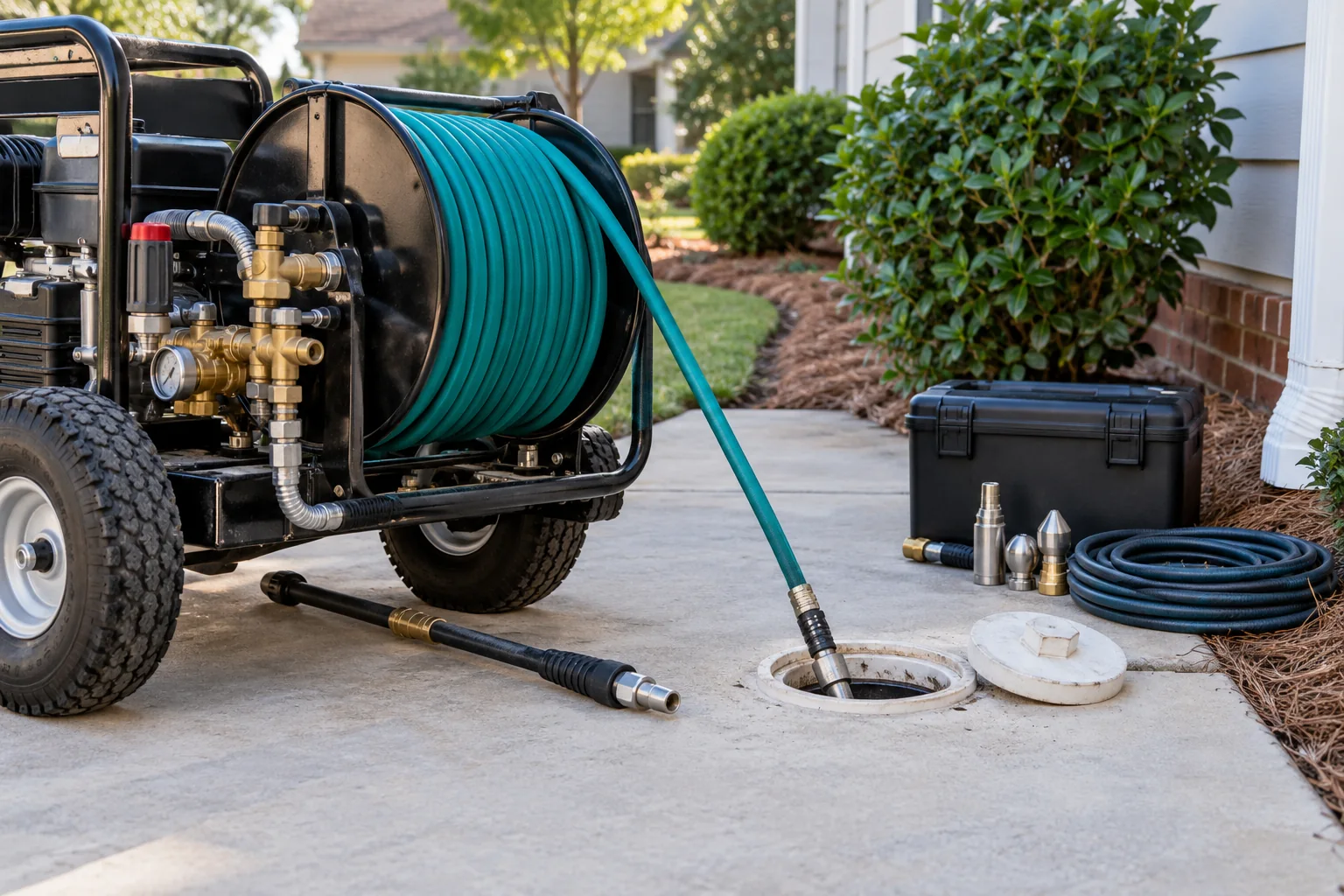
What makes commercial hydro jetting a different job?
Commercial hydro jetting is professional water cleaning of suitable drainage lines serving a business or managed property. The goal may be to remove grease-related deposits, investigate repeated floor-drain backups, or clean a shared wastewater line. It differs from a household call because access, operating hours, authorization, staff safety, and interruption planning may be as important as the obstruction itself.
A restaurant cannot evaluate a drain issue solely by whether the sink empties once. A recurring restriction may affect food preparation, cleanup, or several work areas. In a multi-tenant property, different occupants may share part of the drainage path. The provider needs to understand that arrangement before deciding which line should be inspected or cleaned. Start with the fixtures affected and how the problem changes during normal operations.
This service can be discussed as part of professional hydro jetting in Decatur, with suitability determined by the condition and layout of the drainage. Keep drain cleaning separate from any inspection or certification required for your particular business. Request a scope that identifies the relevant lines, an appointment suited to actual provider availability, and an explanation of how the work will be coordinated with your site contact.
How is cleaning planned around a working property?
Begin by naming the authorized manager and providing the service address, property type, and affected areas. Describe when restrictions occur and whether the problem follows a particular cleaning or preparation activity. If there are several units, specify which ones share symptoms. An accurate account reduces the risk of treating a visible fixture while leaving a shared downstream problem unexplained.
The provider should review access and any known drainage layout. Information about cleanouts, previous inspection, interceptor locations, and earlier service can be useful. Do not assume a line plan is current if tenants or equipment have changed. The provider may recommend investigation before cleaning, especially when the same restriction has returned despite several attempts to clear it.
If jetting is suitable, agree on the affected line and the intended cleaning result. Discuss the equipment location, water supply, hose routing, and temporary restrictions on fixture use. A job taking place outside customer hours still needs access authorization and someone available to answer questions. Confirm the provider's actual scheduling options; discuss the actual available appointment and site-access arrangements.
After the work, the provider should assess drainage under appropriate conditions and explain any remaining concern. An isolated successful flush does not always represent normal business use. Ask what testing is suitable and whether sewer camera inspection is needed to examine previously obscured sections. Keep the written findings with the property's maintenance records so future service starts with evidence.
Which eight operational warning signs should managers record?
- A preparation-area drain slows repeatedly during ordinary use. Record the fixture and the timing without assuming the entire system is grease-blocked.
- A floor drain backs up when a nearby sink empties. That relationship may help identify a shared restriction and should be reported precisely.
- Several tenants experience trouble at once. Coordinate reports through the manager so the provider can evaluate common drainage rather than separate isolated complaints.
- Cable clearing gives only short-lived relief. Save the scope and findings from each visit and describe the interval between recurrences.
- Wastewater interrupts an occupied work area. Explain the contamination and access concern immediately, including which operations have stopped.
- The line repeatedly needs unscheduled attention. A maintenance discussion is useful only after the cause and actual pipe condition are understood.
- Symptoms persist after interceptor servicing. That history may justify examining connected lines, but it does not prove which component is responsible.
- Inspection records already identify deposits or a defect. Share the footage and repair history rather than presenting old findings as proof that no new assessment is required.
Why do commercial drainage restrictions recur?
Grease-producing operations can contribute fats and residue to connected drainage. An interceptor has its own maintenance needs, while the upstream and downstream pipes can still collect material. Emptying an interceptor and cleaning a drain line are different scopes. Tell the provider when each was last done and what actually improved afterward. This helps avoid paying for a familiar task that does not address the current restriction.
Food particles, inappropriate disposal practices, and debris can aggravate an existing obstruction. A manager should describe the process and the fixtures involved without assigning blame before assessment. If a particular waste stream requires specialized handling, confirm that with the provider. General sewer jetting should not be assumed suitable for every industrial line, chemical discharge, or process-water system.
Shared lines make diagnosis more complicated because the symptom may appear far from its cause. A unit on the lowest part of a building can experience a backup associated with a common drainage path. Changes in tenant equipment or operating patterns may also reveal a restriction that was less obvious before. The assessment should consider the actual layout and use rather than recommending the same service for every property.
Structural conditions remain possible even when grease is present. A displaced joint, low section, or other defect can retain material and repeatedly interrupt flow. In that case, cleaning may help expose the condition without fixing it. Read the main sewer line cleaning guide for questions that distinguish removable deposits from repair needs. Ask the provider to explain the evidence behind any change in scope.
What can staff do safely before the visit?
Collect fixture reports, previous maintenance records, and access information. Designate one contact who knows the property and can approve the estimate. Inform affected staff about any temporary restrictions requested by the provider. Do not send employees to open sewer access points or operate equipment as an informal first step. A contaminated or pressurized line requires an appropriate professional method.
If wastewater is present, keep staff and customers away from the affected area and pause the activities discharging into the restricted line where practical. Follow the appropriate site procedures for contamination and workplace safety. Tell the provider about chemical cleaners and any unusual waste already in the drain. Accurate reporting matters more than making the line look ready for an appointment.
Clear a safe equipment path and confirm access to locked service areas. Prepare any reliable drainage plans and note where they might be outdated. Check who can authorize additional assessment if the initial findings change the recommendation. A provider should not be expected to negotiate conflicting instructions from several tenants during the visit. Central coordination makes the estimate, work restrictions, and results easier to communicate.
What should the appointment and completion record cover?
The assessment should identify the affected line or the further investigation needed to do so. Ask whether the proposal concerns a fixture branch, interceptor-connected pipe, or shared building sewer. Discuss pipe condition, access, and any limitations that could prevent cleaning. Where video is recommended, establish whether the camera view is expected before or after initial clearing and what the operator can realistically determine.
The written scope should explain cleaning, inspection, any related maintenance, and the approval process for additional work. Ask whether the estimate includes footage and a final review of the problem area. Grease-interceptor servicing, locating a buried pipe, and repair may be separately quoted. Comparing estimates is easier when those tasks are named rather than bundled under an undefined promise to clear every drain.
During work, the site contact coordinates fixture restrictions and staff access. Hoses and equipment need to be kept clear of ordinary foot traffic. If the provider discovers damage or cannot obtain suitable access, ask for the revised recommendation before work expands. A business should understand why the original method changed and what costs arise from the assessment already completed.
At completion, request the line treated, observed material, result check, unresolved findings, and any recommended next action. A maintenance plan should be based on the actual condition and business use. It should not be framed as a guarantee against every backup. For mixed residential and commercial properties, household drainage considerations can help clarify why individual unit branches may need a separate scope from the shared line.
What affects a business cleaning quote?
A commercial quote depends on access, line configuration, deposits, inspection, and operational coordination. Ask the provider to separate assessment from the proposed cleaning so you understand the charge if the pipe is unsuitable. Timing and additional areas may affect the scope. Confirm the approval terms before the appointment.
| Scope factor | Clarification for the manager |
|---|---|
| Number of lines | Which branches or shared sections are included? |
| Access arrangement | Who unlocks service areas and supplies site information? |
| Operating restrictions | Which fixtures or activities must pause? |
| Interceptor work | Is servicing separate from connected drain cleaning? |
| Inspection | Are footage and an explanation included? |
| Follow-up | What changes require a new estimate or repair assessment? |
When does a business need prompt assistance?
Active wastewater entering a work area, affecting shared facilities, or preventing safe operations needs prompt attention. Describe the situation and confirm an available provider appointment. Restrict access to contamination and arrange any necessary cleanup through appropriate services. Restoring drainage and determining when affected operations can resume are separate decisions.
If standing water is near electrical equipment, keep people away and seek the appropriate urgent help. Managers should follow the property's procedures and relevant requirements for affected operations. Do not keep running sinks or equipment to demonstrate the problem while a backup is active. The provider can plan suitable assessment once access and the immediate conditions are understood.
Commercial hydro jetting questions
Is grease-interceptor pumping the same service?
No. Removing interceptor contents and cleaning connected drainage lines are different tasks. Explain the service history and current symptoms. Ask the provider which component needs attention and whether related work is quoted separately. A recent interceptor service does not by itself prove the downstream pipe is clear.
Can work be scheduled after closing?
Ask about the provider's actual appointment options, access needs, and staffing. Agree on the actual appointment time and a named site contact. Confirm who will be present, which areas will be accessible, and whether any normal operation can resume before the final result check. Make those arrangements before approving the visit.
Should multiple tenants call separately?
A property manager can coordinate reports when symptoms may involve shared drainage. Separate uncoordinated calls can obscure the common pattern. Collect affected units, times, and previous service information, then confirm who authorizes the scope. Individual branches may still need assessment, but the provider should understand the building context.
Does jetting prove the drain meets all requirements?
Cleaning is not a general compliance certification. Ask the provider about the work actually performed and any findings requiring other expertise or official review. Ask whether a separate qualified inspection is needed for the requirements relevant to your operations. Keep relevant maintenance and assessment records for the property's own processes.
How often should commercial lines be cleaned?
There is no universal interval for every business. A recommendation should consider observed deposits, pipe condition, waste practices, and operating intensity. Ask why the proposed schedule is appropriate and what changes could alter it. Preventive cleaning should remain distinct from repair of a persistent structural problem.
Can businesses outside central Decatur ask for coverage?
Yes, ask the provider about the exact service address and drainage type. Nearby Priceville has its own local context and coverage must be confirmed. The Decatur drain jetting guide provides the wider overview, with address-specific coverage confirmed during the call.