
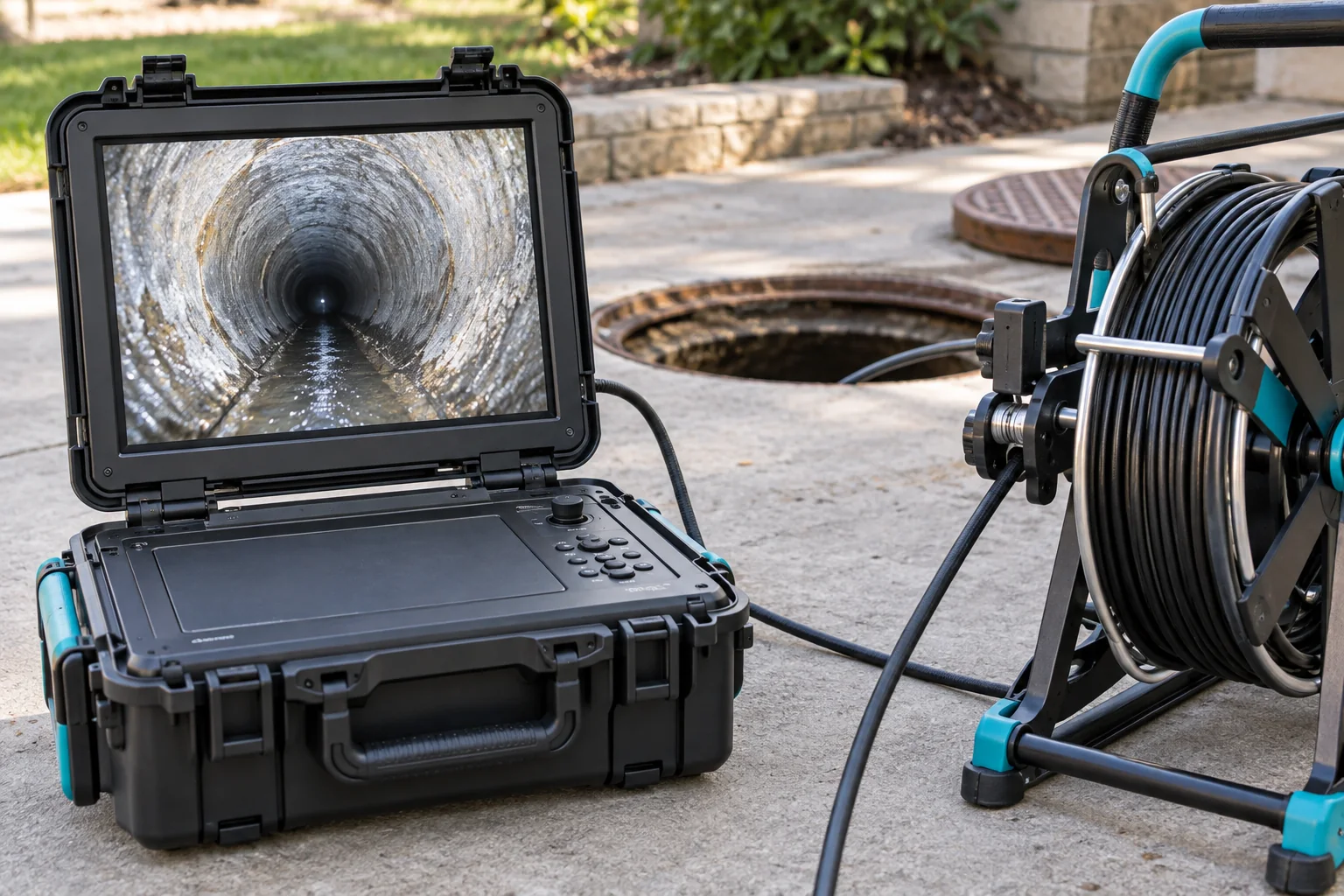
What is a sewer camera inspection?
A sewer camera inspection uses a camera on a flexible cable to view accessible portions of a wastewater pipe. The operator can look for obstructions, deposits, roots, joints, visible damage, and areas holding water. The useful result is an explanation of what was actually visible and how it relates to the symptoms. It is not a promise that a camera will reveal every hidden defect or travel through every blocked line.
Inspection and cleaning serve different purposes. Video can help the provider choose a method, document findings, or review a line after deposits are removed. Jetting or mechanical clearing can restore access where the view is blocked. The appropriate sequence depends on the condition. Ask why the inspection is proposed and what the provider expects to learn before paying for a service with an unclear goal.
As part of sewer and drain jetting in Decatur, inspection can be especially useful when the same blockage keeps returning. Bring old footage and repair records so the provider can distinguish an existing finding from a change. A video should help you make a decision about cleaning or repair, with its limits explained, rather than becoming an unexplained add-on to every drain visit.
How is the camera used, and what can limit the view?
The provider selects suitable access and feeds the camera into the pipe. A monitor displays the view as the head progresses. The operator may note the approximate distance traveled, visible changes, and locations where the camera cannot continue. If locating equipment is part of the service, it may help identify the camera's position from above ground. Confirm whether that task is included or separately quoted.
Water, debris, thick deposits, and tight changes in direction can limit what is seen. A camera under cloudy standing water cannot necessarily show the pipe walls clearly. An impassable obstruction may require initial clearing before inspection can proceed. The provider should distinguish a confirmed visible defect from a section that remains uncertain. Ask whether the view was continuous and whether any relevant part could not be reached.
The picture alone needs interpretation. Deposits and shadows can look alarming without necessarily establishing the extent of damage. Conversely, a line that appears open in a short clip may still have an important defect farther along. Request a narrated explanation of the relevant observations, including why they support the proposed next step. Avoid treating a screenshot without context as a complete diagnosis of the whole system.
If main sewer line jetting is recommended, ask whether the camera is being used to assess suitability before cleaning, confirm the outcome afterward, or both. Those are different objectives. A provider may be able to document deposits initially, then obtain a clearer wall view after cleaning. The estimate should make that sequence and any added charge clear rather than leaving you to assume all stages are included.
Which eight situations make video assessment worth discussing?
- A blockage returns after more than one clearing visit. A visual investigation may help identify why flow repeatedly deteriorates.
- Several fixtures are affected and the shared line is uncertain. The provider should explain how camera access helps narrow the problem.
- Previous root clearing gave only temporary relief. Footage may reveal the entry area or remaining concerns once the passage is accessible.
- A line has known past repairs. Existing records can guide the inspection and help interpret joints or transitions in the view.
- Jetting is proposed for a line with uncertain condition. Discuss whether video can meaningfully assess the relevant section before the method is chosen.
- A property purchase raises sewer-condition questions. Confirm the scope and limitations instead of treating ordinary drain video as a comprehensive home inspection.
- The provider recommends significant repair. Ask to see the relevant findings and understand the location and extent of the visible problem.
- Cleaning improved flow but recurring symptoms remain unexplained. A follow-up investigation may be more useful than immediately repeating the same cleaning method.
What kinds of findings can change the plan?
Grease or residue coating the visible interior may support a cleaning recommendation when the line otherwise appears suitable. The provider should explain whether deposits obscure the underlying pipe and whether more assessment is needed. An inspection that ends at a heavy obstruction has not established the condition of the unseen section beyond it. Treat that limitation as part of the result.
Root material can indicate a point of intrusion, but the footage needs to show enough of the surrounding line to interpret the opening. Clearing roots can restore a passage while leaving the cause intact. Ask whether the provider recommends further cleaning, targeted repair evaluation, or more inspection after access improves. Video should help distinguish obstruction removal from a plan to address the entry point.
A displaced joint, separated section, or visible deterioration may change the recommendation from cleaning to repair. Ask where the finding is, whether it aligns with the reported symptoms, and what remains uncertain. A repair estimate should describe the affected section and the proposed work. If you seek another opinion, footage and a useful written explanation are more helpful than a remembered conversation about a “bad pipe.”
Standing water can suggest a drainage concern, but the operator should explain the circumstances of the inspection and what the view supports. A camera does not automatically provide a precise engineering measurement of pipe slope. Ask how confident the provider is in the interpretation and whether additional investigation is warranted. The outcome should separate visible evidence, professional interpretation, and any issue still requiring confirmation.
How can you prepare without disturbing the system?
Gather previous inspection recordings, repair invoices, and any reliable drain plans. Note the symptoms and the order in which fixtures are affected. If you have an existing access point, identify it without opening a backed-up line. The provider will decide whether it offers suitable camera entry. Unknown access is a question to discuss, not a reason to dig or dismantle plumbing before the appointment.
Tell the provider about chemicals used and any recent attempts to clear the obstruction. Explain whether wastewater is currently backing up or the line is simply slow. Those conditions affect preparation and the likely inspection sequence. Do not repeatedly run water to make the symptoms more obvious; the operator can explain any controlled testing that is useful during the visit.
For a rental, purchase, or managed property, confirm who authorizes the inspection and who should receive the result. Inspection footage can contain property details and should be shared appropriately. Ask about the format and delivery method before assuming it will be provided. A business manager can also review commercial drainage planning to arrange access and coordinate affected staff.
What should happen during and after the visit?
The provider should define the objective before inserting the camera: diagnosing a recurring restriction, reviewing a particular repair, assessing access for cleaning, or documenting the visible line. Confirm the included length or section and what happens if the camera cannot pass. A limited inspection can still be useful, but its limits should be recorded so it is not mistaken for full coverage.
During the inspection, the operator notes relevant findings and explains the relationship to the drainage symptoms. Ask to see the significant areas if practical and request the promised recording or report. If locating is needed, agree on that scope separately when it is not already included. A distance counter or estimated location should be understood within the equipment and access limitations, rather than treated as an unexplained guarantee.
Afterward, discuss the recommendation in stages. If deposits are the main finding, the provider might propose suitable cleaning. If a structural defect is visible, repair evaluation may be needed. If the view is obstructed, initial clearing and another look may be the next step. For a household line, the residential hydro jetting guide explains why individual branches and the building sewer can require different approaches.
Keep the recording, report, and estimate together. Ask which findings are confirmed and which are tentative, whether the inspection covered the area causing trouble, and what signs should prompt follow-up. You should leave with a useful decision record. Ask the operator to document the interpretation and any limits of the assessment.
What determines an inspection quote?
A camera quote depends on access, the inspection objective, the reachable section, and whether clearing or locating is needed. Confirm the recording and explanation you will receive. If the camera cannot pass a blockage, ask what assessment charge still applies and how any additional clearing will be authorized.
| Quoted component | What to establish |
|---|---|
| Access | Which existing entry point will be used? |
| Inspection coverage | Which line and approximate section are included? |
| Initial clearing | Is this separately charged if passage is blocked? |
| Locating | Is above-ground location work included? |
| Recording | Will you receive footage and a findings explanation? |
| Follow-up view | Is a second inspection after cleaning included? |
What if the line is actively backing up?
An active sewage backup needs prompt attention to the immediate drainage and contamination problem. Tell the provider about that before requesting a routine camera appointment. It may be necessary to restore enough passage before a useful video can be obtained. Stop avoidable water discharge and keep people away from wastewater while arranging appropriate professional help.
Do not delay reporting a serious backup simply to obtain footage from a previous owner or service visit. Old records are useful when available, but current conditions determine urgency. Confirm the provider's actual availability and whether cleanup requires another service. Confirm whether the visit includes clearing as well as inspection; video alone does not remove a blockage.
Sewer camera inspection questions
Can the camera see through a complete clog?
Not reliably. An obstruction can stop the camera or hide the relevant section. The provider may recommend initial clearing and another view. Ask what was visible, what was not reached, and how those limits affect the recommendation. A partial inspection should not be described as confirmation of the whole line.
Is a video recording always supplied?
No. Confirm whether a recording, photographs, or written findings are included before booking. Ask how and when the material will be delivered. A useful record identifies the significant observations and their limits, rather than leaving you with an unlabelled short clip that another provider cannot easily interpret.
Can inspection prevent unnecessary jetting?
It can help when a useful view reveals a different cause or shows that cleaning needs a modified approach. Its value depends on access and visibility. Ask what decision the video is intended to support. Inspection should improve the assessment rather than be treated as an automatic extra on every small fixture clog.
Will the camera prove where a leak is?
The view may show a visible opening or damaged area, but it does not necessarily establish every leak or quantify water loss. Ask what the operator can confirm and whether further testing is needed. Drain video should not be presented as a universal substitute for all plumbing leak-detection methods.
Is locating the same as filming the line?
No. Viewing the interior and determining the camera's position from above ground are related but separate tasks. Locating capability and suitable access affect the result. Confirm whether locating is included and how the provider will mark or document any important finding before assuming the video alone establishes a repair location.
Can owners in historic neighborhoods request an inspection?
Yes, callers in Old Decatur can ask about address-specific availability and a suitable scope. Historic surroundings do not establish the condition of a property's drains. Review the Decatur hydro jetting overview, share known repairs, and ask the provider to explain the actual visible evidence before deciding on cleaning or repair.